
My Le Mans memories are not limited to Courage, Oreca, Toyota and Michelin. But if I had to put a figure on it, I’d say that three quarters of them have always had a Japanese connection.
Let’s go back to the 1998–99 off-season.
Despite finishing third at the 1998 24 Hours of Le Mans, Nissan had never really been in contention for the win.
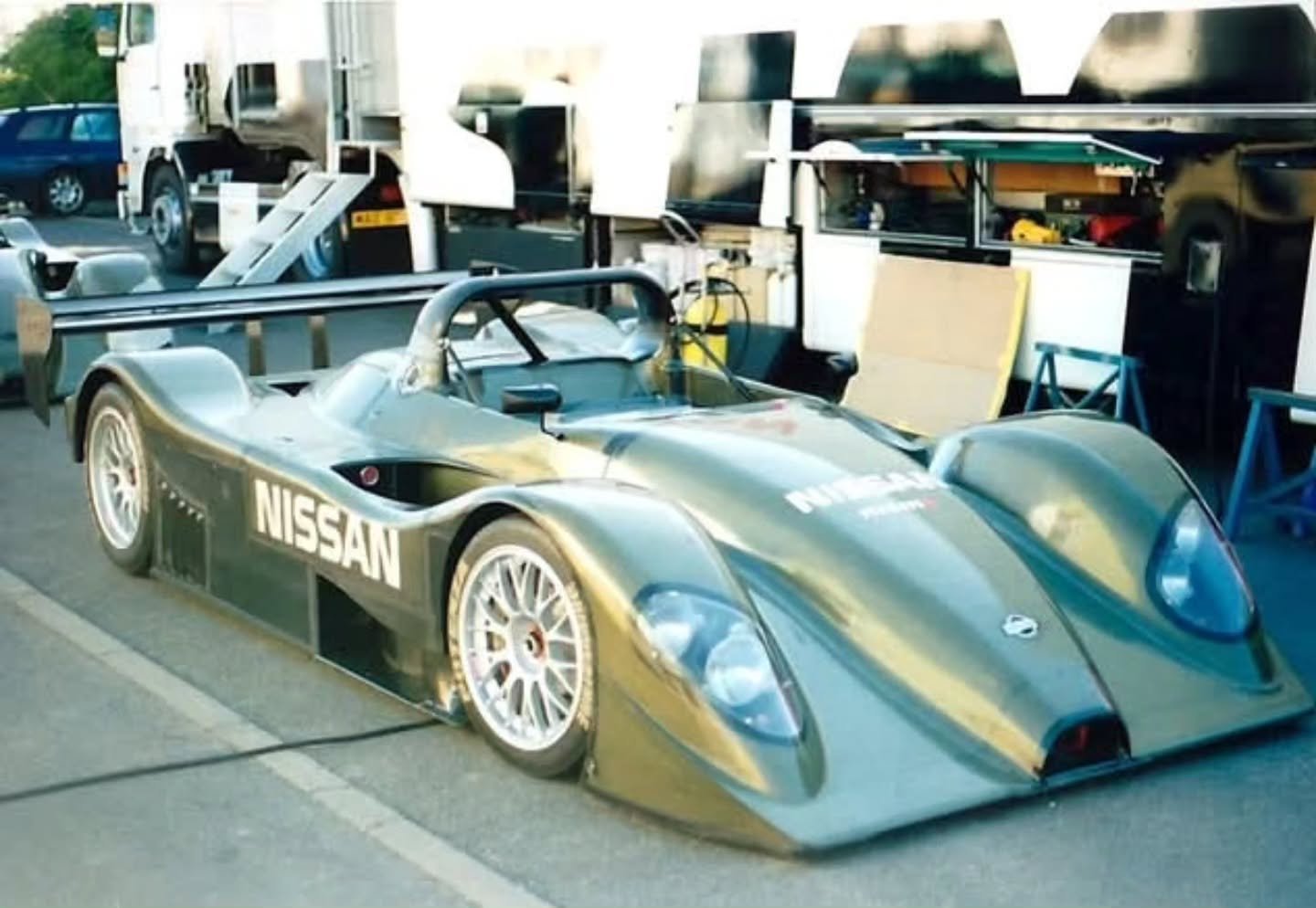
For the 1999 edition, Tom Walkinshaw Racing was no longer involved, and Nismo had decided to enter a brand-new prototype, designed by Nigel Stroud: the Nissan R391.
But time was running short. The Japanese therefore decided to rely on Courage, supplying the team with the engine. Along with the V8 came Bridgestone, their tyre partner.
Courage was tasked with testing several drivers in the prototype, developing certain components of the R391 and testing the Japanese tyres intended for the cars.
In return, Nismo supplied the entire, proven rear-end assembly from the R390 GT1 to equip the Courage Nissan C52s at Le Mans.
All in all, we completed nearly 40,000 kilometres of testing across several European circuits: Le Castellet, Barcelona, Jerez, Monza, Magny-Cours and the Bugatti circuit at Le Mans.
I actually checked the figure again because it seemed so huge!
By the time we arrived at Le Mans, Nissan and Courage had become one team.
To be on the safe side, Nismo entered a C52 alongside its two R391s.
A wise decision, as it turned out.
Eric van de Poele crashed at Tertre Rouge during qualifying, forcing the first R391 to withdraw. The second car, which had been running in fourth place, retired during the night.
Meanwhile, the Nissan-powered Courage C52 driven by Didier Cottaz, Marc Goossens and Fredrik Ekblom kept going.
To this day, and I suspect for quite some time to come, it remains the last car from the Japanese manufacturer to feature in the final classification of the 24 Hours of Le Mans.
For me, this was my first Le Mans with what we used to call a factory team.
The resources were on a completely different scale from anything I had experienced before.
For the sixth time, I was assigned to tyres.
They were still round and black, just like all the others!
But I clearly remember that the Dutch guys running the Bridgestone Motorsport division had their own very distinctive way of doing things.
Another team, another culture, another way of working.
And another chapter in a story that has now lasted for decades.
Funny how some memories stay with you.
Let’s keep that memory box open…
